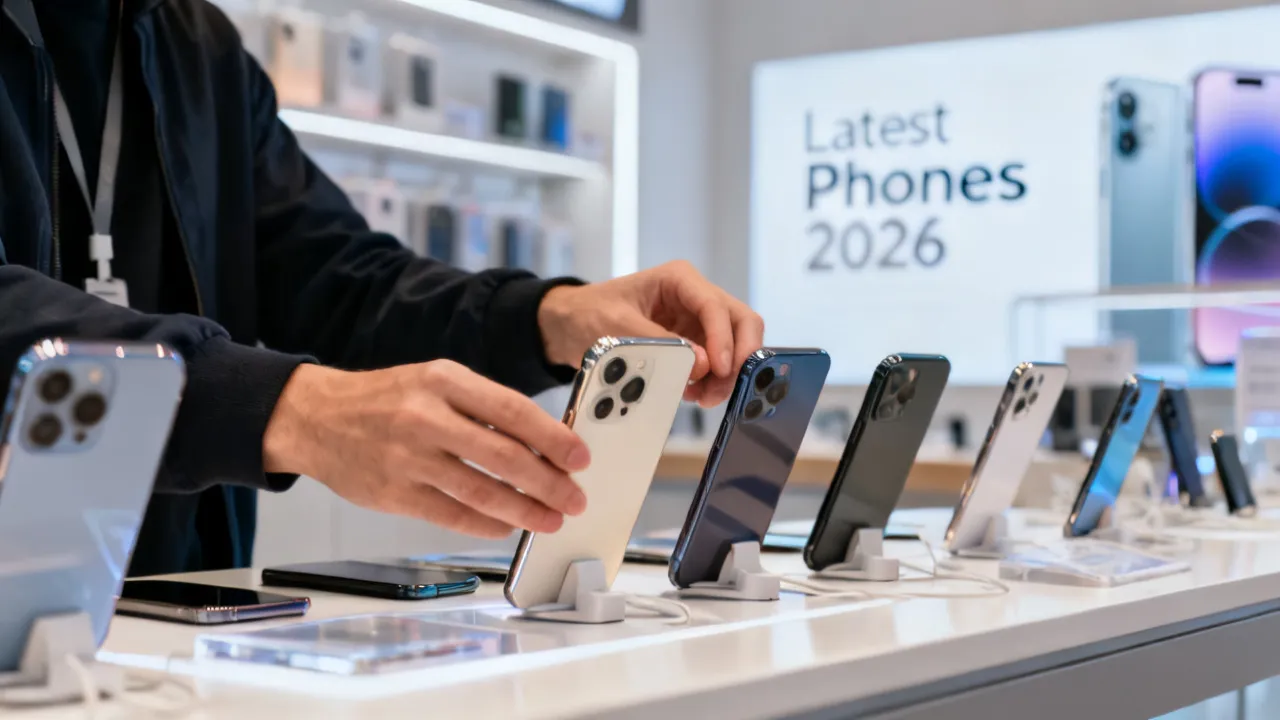
Latest Phones 2026: Government Phone Options Explained
This guide explains how to choose among Latest Phones 2026 while understanding U.S. government-supported phone programs and eligibility steps. It reviews major Lifeline/ACP-style providers, summarizes what services are typically included, and outlines how applications are submitted with required documentation. The background section provides objective context on why these programs matter for connectivity.
Key takeaways for Latest Phones 2026 buyers using government phone programs
If you’re comparing Latest Phones 2026—from camera-forward models to faster connectivity—you’ll get better results by pairing that research with a clear understanding of government-supported wireless programs. These programs generally focus on voice and text plus limited data allowances (or planned upgrades), and they typically require eligibility verification before enrollment. For many households, the “device + service package” model can reduce upfront costs, while the phone selection depends on what each provider offers in a given service area.
In the U.S., providers participating in assistance programs commonly follow a similar structure: eligibility is verified through income thresholds or participation in qualifying government programs, then a plan is issued with specific service limits. Because plan details vary by state, device availability, and time, readers should treat any “what you’ll receive” description as conditional on the provider’s current program terms.
For a 2026-class shopping experience, the key is to stop thinking of your “phone purchase” and “service plan” as two separate transactions. Instead, treat them like one integrated decision: a phone is only as useful as the data, coverage, throttling, and upgrade options you can reliably access for the monthly bill cycle. A device that looks great on paper may disappoint if it can’t sustain your most common tasks inside the program’s speed or data boundaries.
Likewise, a less flashy handset can feel “surprisingly fast” if it’s optimized for everyday efficiency: good Wi‑Fi performance, stable radios, smart background app management, and software features that reduce unnecessary network usage. That’s why the best approach for Latest Phones 2026 buyers using government phone programs is to pair “what phone is newest?” with “what usage pattern will my plan actually support?”
Industry expert perspective: how the Latest Phones 2026 market connects to affordable wireless
From an industry standpoint, the “Latest Phones 2026” cycle is increasingly shaped by two parallel forces: hardware capability (better cameras, AI-assisted photo/video, improved battery technologies, and stronger on-device processing) and connectivity economics (data pricing, network coverage, and eligibility-based discounts). Even when flagship phones are technologically impressive, affordability determines what many consumers can actually sustain over the contract period or monthly bill cycle.
Government-supported wireless programs help close that affordability gap by structuring participation around eligibility and standardized benefit categories. That means your practical decision often becomes:
- What phone choices are currently stocked (or what devices qualify under BYOD rules)?
- How much data is actually included versus optional add-ons?
- Whether premium device upgrades are allowed and what extra costs apply?
- What verification route the provider uses (online application, national verifier, or document upload)?
In other words, you’re not only shopping for features—you’re also shopping for fit between a device tier and the service limits defined by the program. When you understand the “system,” you can better predict whether a 2026 camera phone will help you in real life (e.g., capturing school events and uploading them later) or whether you’ll primarily rely on Wi‑Fi for high-data tasks.
In many households, the real bottleneck is not talk time—it’s reliable access to data for navigation, job searches, telehealth portals, school assignments, and day-to-day messaging that often blends text, images, and short video. Assistance programs typically solve the voice/text foundation and provide a measure of data. The practical question becomes: will the included data support your “important moments,” or will you have to plan around usage limits?
This is also why manufacturers and network operators increasingly design phones with efficiency in mind: background app throttling, adaptive refresh rates, improved compression for photos and video uploads, and better low-power connectivity modes. Even when government plans include only limited high-speed data, these design choices can make the difference between “I can do it on my phone” and “I always hit a limit.”
Government phone program overview (and where it fits in your Latest Phones 2026 plan)
Many assistance programs used for affordable mobile service in the U.S. are based on eligibility categories tied to low income and participation in certain government benefits. Programs often include:
- Basic service bundles (unlimited or near-unlimited voice and text in many offerings)
- Limited high-speed data with optional “data boost” features
- Device support (a provided handset or a bring-your-own-device option), subject to program rules
- Provider-specific upgrade options for higher-tier devices or additional features
Instead of treating government phone options as a separate “world,” view them as a financing and eligibility layer layered on top of your device research. If your goal is a 2026-class experience—such as improved imaging, smoother streaming, and better battery endurance—you should map those needs to the plan’s actual data capability and any upgrade paths.
A helpful way to frame the decision is to think in three layers:
- Eligibility layer: Will your household qualify and how will you prove it?
- Plan/service layer: What do you get for voice, text, and data—and what happens after any data threshold?
- Device layer: What handset model tier is offered (or what phones can you BYOD)? How will that device behave under the plan’s connectivity limits?
When all three layers align, the “Latest Phones 2026” experience becomes practical and predictable rather than frustrating. For example, you might select a 2026 phone with strong battery efficiency because you expect limited data or throttling; the combination helps you keep communications reliable and reduces how often you need Wi‑Fi purely to preserve performance.
Comparison table: provider websites and what the government-supported packages typically include
The table below summarizes the official government-phone-plan websites referenced in this guide, the types of service included in those programs, and whether additional package costs may apply. Because plans differ by state and time, always confirm current terms on the provider website.
| Provider (official plan page) | Typical services included | Potential additional package costs |
|---|---|---|
| SafeLink Wireless | Unlimited talk and text; data allowances that vary by plan/state; affordable smartphone or BYOD options depending on eligibility | Premium device upgrades and/or additional data may cost extra |
| Assurance Wireless | Affordable Android smartphone (when available); unlimited talk and text; data allowances | Optional upgrades such as higher-speed data or international calling may cost extra |
| StandUp Wireless | Affordable smartphone or BYOD options (varies); unlimited talk and text; data plans | Premium phone upgrades or extra data may involve fees |
| Access Wireless | Unlimited voice and text; limited high-speed data with Lifeline/ACP-style benefits (where applicable) | Data boosts and device upgrades may cost extra |
| True Wireless | Government-supported phones and voice/data plans upon eligibility | Optional upgrades to better devices or additional data plans may cost extra |
Source of information:
source: https://www.safelinkwireless.com
source: https://www.assurancewireless.com
source: https://standupwireless.com/
source: https://www.accesswireless.com
source: https://www.gotruewireless.com/
Note: The “additional costs” column reflects common optional upgrade categories; exact pricing varies by plan, device tier, and provider policy at the time of application.
How to qualify and apply for a government-supported phone program
To get a government-supported phone and service plan, very applicants follow a verification workflow that typically includes eligibility confirmation, documentation submission, and enrollment approval. While the specifics differ by provider, the following framework reflects how the application process generally works across these programs.
Eligibility criteria (typical requirements)
Very participating providers evaluate applicants using one (or more) of these paths:
-
Income-based eligibility
Applicants often qualify when household income meets the applicable threshold rules for the program (for example, income at or below a specified percentage of federal poverty guidelines for Lifeline-style benefits, and a different threshold for ACP-style benefits). -
Participation in qualifying assistance programs
Common qualifying programs may include benefits such as Medicaid, SNAP, SSI, and housing-related assistance (program names vary by category and eligibility structure). -
Residency considerations
Some program structures include enhanced benefits or additional considerations for people who reside on qualifying tribal lands.
Even when you’re confident you qualify, it’s worth anticipating common friction points. For instance, some households have documents but the names or addresses don’t match exactly across records. Others have program participation but lack a recent confirmation letter or screenshot that clearly shows dates. The easiest way to avoid delays is to gather documents early and make sure they match the information you enter on the application form.
Step-by-step guide: application process (typical)
-
Choose a provider that serves your area
Start by confirming the provider availability where you live, since device and plan availability can vary by state. -
Prepare eligibility documentation
Gather materials that demonstrate income status or enrollment in qualifying government programs. Providers may ask for documents such as proof-of-program participation or supporting income/household records. -
Submit an online application
Many providers offer web forms that request personal details and eligibility information. Some providers support the Lifeline National Verifier workflow (depending on their program integration). -
Complete document upload or verification
If required, upload documents following provider instructions. Accuracy matters—mismatched names, incomplete pages, or unclear uploads can delay approval. -
Wait for approval and select the device/service option
Once approved, the provider issues plan terms and—where available—selects a supported handset tier. Some programs allow BYOD if your device qualifies. -
Confirm plan details after enrollment
Review your included minutes/texts/data allowances and any optional upgrade pricing so you can align the program with your real usage.
It’s also wise to think about timing. Phone service often needs to be active before you can complete two-factor authentication for banking, job applications, and email accounts. If you’re switching providers or starting a new plan, consider how you’ll maintain access to critical accounts during the activation window. If the program includes a new device, check shipping and setup requirements so you don’t end up stuck with an unconfigured handset at the moment you need it most.
Which “Latest Phones 2026” features actually matter when your plan has data limits?
When you’re on a plan with capped or limited high-speed data, the top 2026 device for you isn’t necessarily the one with the highest spec sheet—it’s the one that uses your available bandwidth efficiently and performs well on moderate networks. Consider these feature categories:
- Battery management for mixed usage
Efficient power draw matters if you stream in bursts, use navigation, or work on-the-go. - Camera features that reduce rework
Even if you don’t upload everything fastly, good capture quality reduces the need to retake and re-upload. - Adaptive streaming and compression
Phones that support efficient codecs and network-aware streaming can help you get more watch time from limited high-speed data. - Storage and offline modes
Downloading content (maps, documents, podcasts, offline videos) can offset data restrictions. - Wi‑Fi reliability
If you have home or workplace Wi‑Fi, a device that switches seamlessly between Wi‑Fi and cellular can improve stability.
From an expert buying perspective, these practical efficiencies often outperform “headline” benchmarks when your plan’s high-speed data is limited. For a household using assistance programs, the phone’s ability to manage data intelligently can matter as much as raw camera resolution.
Here are additional 2026-era features that can be especially valuable under limited high-speed data situations—especially if you depend on the phone for schooling, work tasks, or essential communication:
- Smarter app background behavior
Look for software that can restrict background refresh or optimize battery. This prevents apps from using data while you’re not actively using them. - Efficient messaging and media previews
Modern messaging apps often generate lightweight previews and allow you to download full images/video only when you’re ready. A phone with strong Wi‑Fi and efficient displays helps these workflows feel fast. - Offline-first tools
Some phones and ecosystems support offline navigation, offline captions, offline reading modes, and offline document access—features that reduce reliance on high-speed cellular data. - Better low-signal handling
Even under a government plan, connectivity quality varies by location. Devices with improved signal stability and efficient radios can reduce dropped calls and improve reliability for video meetings when coverage is imperfect.
Finally, it’s important to remember that “data limits” aren’t always purely about speed. Some plans cap high-speed data and then switch to a lower throughput mode. In that case, your goals should shift from trying to do everything at full speed to doing the right things efficiently: save downloads for Wi‑Fi, use compression-friendly apps, and plan photo/video uploads for times when you can connect reliably.
Provider-by-provider guidance: aligning your needs with what each program offers
Because phone programs can have different device inventories and upgrade rules, it helps to plan by provider logic rather than by marketing names alone.
SafeLink Wireless
SafeLink Wireless is typically associated with offering an eligible customer either a supported handset or a BYOD option. The core package generally centers on unlimited talk and text with data allowances that vary by plan and state. Optional premium upgrades and additional data may increase costs, so you should check which upgrades are available if you intend to use the device as your primary streaming or work phone.
When deciding whether a SafeLink-supported handset meets your expectations, you’ll get better results by focusing on three practical questions. First: does the supported device tier include Wi‑Fi performance you can rely on? Second: does the plan provide enough data for your daily “must-do” activities (maps, messaging with images, essential browsing)? Third: what upgrade path is available if you need more data occasionally (for example, during job interviews with video or while traveling)?
For 2026 camera-minded buyers, it can also be helpful to think of photo/video workflows. Even if the plan has limited high-speed data, a strong camera paired with efficient on-device capture can reduce the number of retakes and minimize the number of times you need to re-upload. Then, you can move the “heavy upload moments” to Wi‑Fi whenever possible.
Assurance Wireless
Assurance Wireless commonly emphasizes an eligible Android handset (when available), paired with unlimited talk and text and data allowances. If your usage pattern is heavier—video conferencing, frequent uploads, or large downloads—you should look carefully at data limits and optional add-ons such as higher-speed tiers or international calling services.
Android-based experiences can be particularly useful under limited data when you rely on offline tools. For example, navigation apps often let you download maps ahead of time. Messaging apps typically manage media delivery more intelligently than some older implementations. Also, the broader Android app ecosystem includes many “download for offline” options that help reduce cellular consumption.
If you anticipate using 2026 phone features like advanced camera modes, consider how these features interact with your workflow. Some camera modes produce larger file sizes. If you plan to share images quickly on the cellular connection, file sizes can matter. A practical strategy is to capture at high quality but upload on Wi‑Fi, while using cellular for compressed or smaller-share methods where possible.
StandUp Wireless
StandUp Wireless often offers a supported phone or a BYOD option alongside unlimited talk and text and data plans. The critical decision point is whether you need a higher-tier device upgrade or whether the included handset and data allowances meet your day-to-day needs (especially if you rely on navigation and mobile media).
StandUp’s BYOD possibility can be advantageous for 2026 buyers who already have a newer handset in mind. However, you’ll want to verify compatibility carefully. A phone being “new” doesn’t automatically mean it will be accepted in a BYOD program—carrier compatibility, supported network bands, and device provisioning rules can influence approval. Before you purchase the latest phone, check BYOD eligibility and ask whether a specific model is supported.
Additionally, because device inventories may change, it’s wise to approach the decision with flexibility. If the exact 2026 model you want isn’t available through the program, you may still find a device tier that provides the practical experience you need—especially if it includes good battery life, stable Wi‑Fi, and sufficient storage for offline resources.
Access Wireless
Access Wireless is commonly structured around unlimited voice and text plus limited high-speed data under Lifeline/ACP-style benefits, with opportunities for data boosts and device upgrades as optional paid features. If you anticipate periods of higher usage—such as travel or peak workload weeks—understanding the “boost” mechanism can help you avoid unexpected throttling or slowdowns.
Data boost programs are often the difference between a plan that feels adequate and one that feels limiting. Even if you don’t need constant high-speed data, understanding when boosts are available (and whether they require additional payments) can help you schedule heavy tasks. For instance, you could save large downloads, video calls with higher resolution, or extensive uploads for times when boosts are active.
For buyers who care about camera and content creation, note that video files are typically large. Under limited data, streaming or uploading video can become challenging after you hit a high-speed threshold. But if you have a phone with strong offline capability (like reliable storage and efficient sharing tools), you can record and store content now and upload later when you’re on Wi‑Fi.
True Wireless
True Wireless is typically described as offering government-supported phones and voice/data plans for those who qualify. Optional upgrades to better devices or additional data are often available, so your goal should be to confirm what handset class you can select (if any) and what upgrade pricing looks like before committing.
Under True Wireless-style offerings, it can be helpful to ask two “before you say yes” questions: what is the baseline device tier you’ll receive, and what is the most cost-effective way to upgrade if your baseline device doesn’t meet your needs? For many 2026 buyers, the biggest mismatch is not the phone’s ability to run apps—it’s the phone’s ability to store media, maintain battery under mixed usage, and remain stable when multitasking.
Also, if you’re considering a camera-forward 2026 device, think about storage. Better cameras may generate larger files. If the supported phone comes with limited storage, you may need to rely on cloud backup (which uses data unless you’re on Wi‑Fi). So storage capacity and your Wi‑Fi access pattern can become central to your “real” experience.
How to compare plans like an informed buyer (beyond the headline)
When evaluating any option related to Latest Phones 2026, use a comparison checklist:
- Service included: voice/text scope and the structure of data allowances
- Data speed and thresholds: confirm whether data is “limited high-speed” and what happens after the threshold
- Upgrade policy: whether premium phone upgrades or additional data are optional and at what cost category
- Device availability: whether you receive a handset or need to BYOD
- Activation timing: how long enrollment may take after documents are submitted
- Coverage expectations: whether the provider’s network performance matches your everyday locations
This approach keeps your purchasing decision evidence-based rather than impression-based.
To make the checklist even more actionable for 2026 buyers, you can also compare plans in “scenario mode.” Instead of only reading general plan terms, ask how the plan behaves in the situations you actually face. For example:
- Job searching: Are you able to upload documents and attach images when you need them? Does the plan allow enough speed to browse listings and send applications?
- School and homework: Can you download worksheets and access learning apps without constant delays? Do offline modes help?
- Family communication: Can you send photos and short videos within acceptable time? What happens when you’re not on Wi‑Fi?
- Healthcare portals: Can you access telehealth apps or load forms reliably in your neighborhood?
- Travel and commutes: When you go outside your usual area, does the provider offer stable performance, and are data boosts available if you need them?
These scenario questions matter because assistance plans can be “fine” in general but weak in specific use cases—especially for users who depend on video or large file handling.
FAQs
FAQ 1: Do Latest Phones 2026 models automatically work with government-supported wireless programs?
No. Government-supported programs may provide specific supported handset inventories or allow BYOD only for devices that meet eligibility and compatibility requirements. Check each provider’s current device and BYOD policy before assuming a specific 2026 model will be supported.
If you’re determined to use a particular 2026 model, consider verifying compatibility before you commit. A quick compatibility check can save money and prevent delays. Some providers accept only certain device types, while others accept only specific IMEI/series patterns. Even if your phone is “unlocked,” it may still lack required network features or bands used by the provider’s partner networks.
FAQ 2: What services are usually included in government-supported phone plans from these providers?
Across the referenced providers, the very common pattern is unlimited or near-unlimited talk and text, along with data allowances that vary by plan and state. Some offerings also include optional upgrades such as additional data, higher-speed tiers, or international calling features.
It can also help to think about what’s not included in many assistance programs. Often, “unlimited data” marketing doesn’t mean unrestricted high-speed data. A plan may include unlimited overall data usage with throttling after a threshold. That’s not necessarily bad, but it does change what you can realistically do on cellular after you reach your limit.
FAQ 3: How do I apply for a government-supported phone program?
Typically, you submit an online application and then complete verification through a national verifier process and/or document upload. You’ll generally need to provide proof related to income or participation in qualifying programs.
If you’re applying for the first time, it can be useful to keep a checklist of required documents: ID, proof of address (if requested), evidence of income or qualifying benefit enrollment, and any verification forms. Keep scans or photos clear and ensure all pages are included. Many approval delays come from incomplete submissions rather than from ineligibility.
FAQ 4: Can I choose the phone model I want under these programs?
Often, you receive an eligible supported handset based on current inventory, or you use a BYOD route if allowed. Premium upgrades may be available for additional cost, but exact selection depends on the provider’s current offerings.
In some program settings, the “choice” you have is effectively a choice between device tiers. A lower-tier device might be provided at no cost, while higher-tier options may require an upgrade payment. For Latest Phones 2026 buyers, it’s important to understand that you may not be able to select the exact model you see in a retail ad. Instead, you’ll likely choose from what’s available through the program’s supported inventory.
FAQ 5: Will I definitely be approved for a government phone program?
Approval depends on eligibility and verification. Meeting the general eligibility categories does not guarantee approval in every case, because provider verification and documentation requirements must be satisfied.
Even if you qualify under income rules, approval can hinge on verifying household details, address accuracy, or documented benefit participation. It’s also possible for providers to request additional information if something doesn’t match. If you’re close to a cutoff date for documentation, consider obtaining the most recent proof so your application is less likely to stall.
FAQ 6: Are there additional charges even if the plan is part of an assistance program?
Yes, optional upgrades can involve extra charges. Examples may include premium device upgrades, extra data packs, or additional services such as international calling—depending on the provider and plan terms.
To avoid surprises, confirm whether any “upgrade pricing” is a one-time fee, monthly fee, or depends on the billing cycle. Some options may also require service changes. If you’re budgeting, treat upgrades as optional experiments: only add what you truly need for specific times (for example, during travel weeks).
FAQ 7: What should I confirm before ordering or activating my phone?
Confirm your data allowance structure, any throttling or speed changes after a threshold, device compatibility (if BYOD), and the cost of optional add-ons. Also confirm activation timing to avoid delays in your service.
In addition, it’s smart to confirm practical details that affect daily life: whether the plan allows hotspot use (if you need it), whether international calling features are included or add-on only, and whether Wi‑Fi calling is supported in your location. These smaller features can be decisive for reliability—especially if cellular coverage is inconsistent where you live or work.
Background context: why “government phone programs” remain relevant in the Latest Phones 2026 era
As consumer expectations for smartphones rise—especially around camera performance, streaming quality, and AI features—monthly connectivity becomes a more important part of affordability. Assistance programs help eligible households maintain connectivity even as device capabilities and network demand grow. At the same time, these programs emphasize eligibility verification and standardized benefit categories, which helps keep benefits consistent while still allowing optional upgrades for users who need higher-tier services.
For readers following Latest Phones 2026, the very objective way to think about government phone options is as a structured affordability pathway. The value comes from aligning eligible service limits with your usage pattern and choosing a device that performs well within those limits.
Another reason these programs remain relevant is that the “total cost of ownership” for modern phones extends beyond the initial handset price. People often need reliable plans to access banking, school systems, and healthcare portals. When connectivity is affordable, it reduces the pressure to delay important tasks (like uploading documents, confirming appointment times, or responding to job opportunities). So assistance programs support not only communication, but also access to essential services.
At the same time, the 2026 smartphone landscape encourages constant upgrades because of new camera improvements and AI features. Not every household can afford those upgrades without help. That’s why device financing through government-aligned programs still matters: it allows eligible consumers to obtain a modern phone—or at least a practical smartphone tier—rather than being stuck with outdated devices that may struggle with modern apps, security updates, and media sharing needs.
References and sources
To ensure readers can verify details and current terms, the following references are included. For the very accurate application requirements and plan specifics, always consult the provider’s official website.
- https://www.safelinkwireless.com
- https://www.assurancewireless.com
- https://standupwireless.com/
- https://www.accesswireless.com
- https://www.gotruewireless.com/
Disclaimer
1) The above information comes from online resources, and the data is as of October 2023.
2) This website cannot guarantee that applicants will definitely get a government affordable phone. For specific application requirements and how to obtain it, please refer to the official requirements of the provider. This website will not be updated in real time.