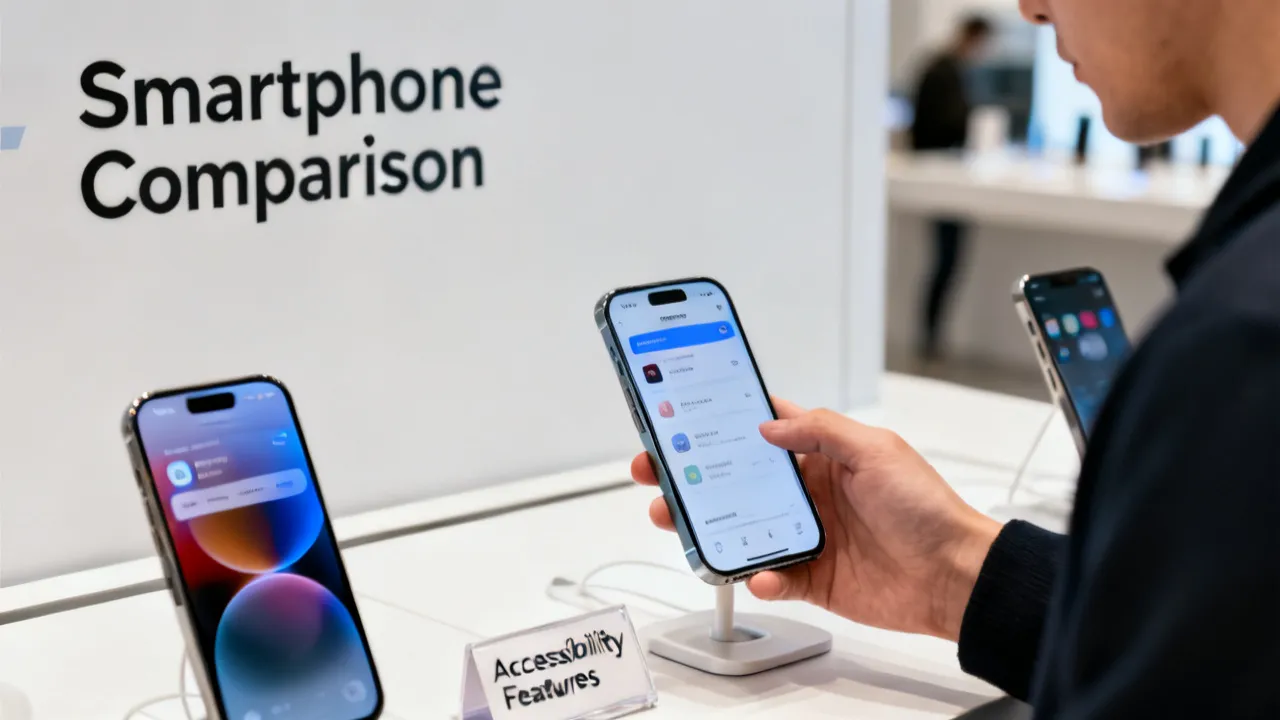
I Need a New Phone: Government Plan Options
If you need a new phone, this guide compares major government-supported wireless programs and shows how eligible households can switch to service that fits their budget. It explains how providers verify eligibility (income and qualifying programs), what plan components typically include, and how to apply online or via official verification tools—so you can make an informed choice.
Start Here: How “I Need a New Phone” Can Be Solved Through Government-Supported Wireless
If you’re saying I Need a New Phone, the fastest practical path is to pair your device needs with a government-supported wireless benefit that may reduce monthly service costs. In the U.S., several Lifeline-linked programs and related initiatives partner with carriers that can provide a handset and service plan for qualifying households. The key is matching your situation—income level, participation in assistance programs, and (where applicable) residency status—to the provider whose application process you can complete.
From an industry perspective, the very important thing to understand is that these programs generally revolve around eligibility verification first, and device availability second. Plans, device types, and data allowances can vary by state and by program enrollment rules. Therefore, your top strategy is to (1) confirm eligibility, (2) prepare required documentation or use an official verifier, and (3) compare plan inclusions (voice, text, and data) rather than focusing only on the handset.
To make the process smoother, think of it as a sequence rather than a single application: eligibility confirmation → application submission → verification review → account activation → final plan and phone selection. When people skip steps or assume that a “new phone” automatically comes with enough data for their everyday needs, they often end up frustrated even after approval. A little planning up front can prevent the most common problems.
What “Government Phone Program” Usually Covers (and What It May Not)
Very government-supported phone programs built around Lifeline and related benefits typically support a wireless service baseline that includes:
- Voice minutes (or unlimited talk within plan rules)
- Text messaging (often unlimited)
- Mobile data (sometimes limited high-speed data depending on the plan)
- A compatible smartphone or a bring-your-own-device (BYOD) option
Optional add-ons—such as premium devices, higher data tiers, or international calling—may come with extra costs. In practice, providers aim to keep entry-level plan components consistent, while upgrades depend on inventory, state rules, and the consumer’s selection during enrollment.
One of the most important “what it may not cover” realities is speed and data volume. Many government-supported plans provide enough connectivity for messaging, calls, email, and basic internet use, but may not be ideal for heavy streaming or large data downloads at high speed. Some plans reduce speeds after a data limit is reached rather than cutting service entirely. That distinction matters because you can still use the phone, but the experience changes. Knowing that in advance helps you choose a plan tier that matches your real-world needs.
Another “may not cover” area involves device preference. Even if a provider offers multiple handset options, the specific model can depend on stock and what’s assigned at enrollment. If your phone must have a specific feature—such as a very large screen, a specific brand, or compatibility with certain apps—check whether the program offers that model or whether you might need BYOD or an upgrade path.
Comparison Table: Official Provider Plan Pages (Services + Possible Add-On Costs)
Below is a concise comparison of the official provider plan pages and the services typically included in their government-supported offerings. Additional package costs are summarized as “possible” because exact charges can depend on the handset tier, data boosts, and state-specific rules.
| Provider (Official Plan Page) | Services Included in Government-Supported Offerings | Possible Additional Package Costs |
|---|---|---|
| SafeLink Wireless | Government-supported smartphone or BYOD option; unlimited text and calls; data allowances depending on the plan | Premium device upgrades and/or extra data may cost more |
| Assurance Wireless | Government-supported Android smartphone; unlimited talk and text; data allowances | Additional high-speed data or international calling may be optional upgrades |
| StandUp Wireless | Government-supported smartphone or BYOD option; unlimited talk and text; data plans | Premium phone upgrades or extra data available for a fee |
| Access Wireless | Unlimited voice and text; limited high-speed data; benefits tied to Lifeline/related programs | Data boosts and device upgrades available for a fee |
| True Wireless | Government-supported phones and service plan that includes voice and data (per program rules) | Optional upgrades to better devices or additional data plans may cost more |
Provider sources are listed immediately after the table:
source: www.safelinkwireless.com
source: www.assurancewireless.com
source: standupwireless.com
source: www.accesswireless.com
source: www.gotruewireless.com
(Information summarized from official program pages; see the “Reference Links” section at the end for additional sources.)
Eligibility and Requirements: What You’ll Typically Need to Qualify
If your situation aligns with the criteria below, you may be able to enroll in a government-supported wireless benefit and receive service that helps address your “I need a new phone” goal.
Common eligibility pathways include:
- Income-based qualification: often at or below a specified percentage of the federal poverty guidelines for Lifeline-style benefits, and a higher threshold for ACP-style benefits (if applicable).
- Program participation: enrollment in qualifying assistance programs such as Medicaid, SNAP, SSI, or FPHA.
- Geographic considerations: some programs may provide additional benefits for residents on Tribal lands.
Important industry note: Requirements can differ slightly by provider and state, and benefits may depend on how you apply (online verification versus document upload). Treat eligibility confirmation as the first checkpoint, not a final guarantee of device assignment.
To expand on what “eligible” usually means in everyday terms: you generally need to meet a threshold that qualifies you as low-income or a participant in an approved government assistance program. You also typically need to meet the household rules. In most systems, “per household” means only one eligible wireless benefit line per household, and you must provide accurate information so the program can confirm that you are not duplicating benefits. That’s why the application may ask for both your details and information tied to your assistance program or income.
Another detail many people miss is that eligibility verification tools may require you to provide information that matches exactly what’s on record for your assistance program. For example, inconsistent spelling of your name, a different address format (Apartment vs. Apt), or a mismatch in a program ID number can slow down approvals. A minor clerical mismatch can trigger a “manual review” stage that delays the timeline.
Finally, if you recently moved, started a new job, or changed benefits, your eligibility may still be valid but the record needs to reflect your updated household/address information. Before applying, take a moment to make sure your documentation reflects your current circumstances as required by the application.
How to Apply: Step-by-Step (From an Expert Workflow Perspective)
Across these providers, applications usually follow one of two patterns:
- Online application + documentation upload (upload proofs of eligibility)
- Online application using official eligibility verification tools (where supported)
Step-by-step process you can follow
-
Gather your eligibility information:
- Proof of participation in programs (e.g., Medicaid/SNAP/SSI)
- Or proof of household income (if income-based eligibility is your route)
-
Choose your provider based on:
- Whether you prefer a handset option or BYOD
- Your expected data needs (voice/text-only usage versus apps and maps)
- Availability in your state
- Complete the online application on the provider’s official site.
-
Submit verification materials if required:
- Upload documents exactly as instructed
- Double-check names, addresses, and program IDs
- Wait for confirmation and track status if the provider provides it.
- After approval, select your service/device option (handset tier or BYOD plan terms, depending on the program and what’s offered).
-
Confirm plan details in writing:
- Voice/text terms
- Data allowance and any throttling rules
- Whether upgrades involve additional fees
To make this even more practical, here are additional “workflow” tips that help applicants avoid the most common delays:
- Use a stable email and phone number during the process: Activation steps may send verification codes or status updates. If you don’t have access to the email you enter, you can miss steps.
- Take photos/scans that are readable: Uploads typically require clear images. If the photo is blurry or cut off, it can be rejected.
- Keep your documents consistent: If your proof includes your name and address, ensure it aligns with the address you enter in the application.
- Don’t apply to multiple providers at the same time: If you submit overlapping applications, you can complicate verification and delay your final approval. It’s generally better to pick one provider and complete the full process.
- Understand “BYOD” limitations: BYOD isn’t always a guarantee. Even if you own a phone, it may fail compatibility checks. Compatibility checks help ensure the device can work properly on the carrier network.
Choosing the Right Option When You “Need a New Phone”
At the consumer level, the handset itself is what draws attention. However, from an expert standpoint, choosing the right plan depends on aligning your day-to-day usage pattern with what the benefit includes. Consider these practical decision points:
- Data intensity matters: If you rely on navigation, video, or frequent mobile hotspot use, entry-level data allowances may feel tight after heavy use. Look for plan language around data limits and whether “data boost” features exist (often as optional paid add-ons).
- Device compatibility for BYOD: If you already own a phone, verify whether it’s compatible with the provider’s network requirements. A mismatched device can delay enrollment or force you into a handset option.
- Upgrade expectations: Some providers offer premium device upgrades, but the trade-off is cost. If your priority is immediate connectivity and predictable monthly service, it’s usually top to start with the baseline government-supported package.
- Customer support and troubleshooting: Ensure the provider offers clear support paths for account activation, device setup, and plan changes.
Because “I need a new phone” can mean different things, it helps to define your real priority. For example:
- Priority A: reliable calls and texts (for family contact, job calls, or school coordination) → a basic unlimited talk/text plan with workable coverage is often enough, and you may not need maximum data.
- Priority B: internet access for job applications and online forms → you’ll want a plan with enough high-speed data to open apps and upload required documents without excessive waiting.
- Priority C: navigation and daily map use → you’ll want to check whether data is limited and what happens when you hit the threshold (speed reduction vs. complete interruption).
- Priority D: learning and homework → consider whether your household’s assignments require video streaming or whether low-data browsing and messaging is typical.
- Priority E: emergency preparedness → keep in mind that reliability includes network coverage and the ability to maintain service during budget constraints.
When you know which priority is yours, you can compare options more intelligently. It’s still okay to want a good handset—just pair it with a plan that supports the way you’ll actually use the phone.
Provider-by-Provider Insights (How Differences Typically Show Up)
Even when programs share similar eligibility structures, differences can appear in device selections, the enrollment flow, and how additional services are offered.
SafeLink Wireless
SafeLink Wireless is widely known for offering smartphone options linked to government-supported wireless benefits. The application flow generally emphasizes online submission and eligibility verification. When consumers talk about “needing a new phone,” this provider is often chosen for handset availability through the program and the typical inclusion of unlimited talk/text, with data depending on the selected plan tier.
In practice, applicants who prefer a streamlined experience often like the clarity of a dedicated program site and the direct path from application to service selection. A good way to evaluate fit is to look at whether SafeLink offers a bring-your-own-device pathway if you already own a compatible phone, or whether it provides a handset with the features you need (camera quality, screen size, battery type, etc.).
Assurance Wireless
Assurance Wireless typically emphasizes an Android smartphone offering as part of its government-supported program structure, along with unlimited talk and text and data allowances. In many cases, the enrollment process can involve an eligibility verification step that may be supported by official verification mechanisms—meaning your documentation workflow could be simpler if you have information that matches verifier requirements.
From a consumer planning perspective, Assurance may be a strong option if you want an Android experience and prefer receiving a device rather than troubleshooting BYOD compatibility. Still, it’s worth checking whether the device you receive supports the apps you rely on (for example, specific banking apps, video call apps, or school portals). Most modern Android smartphones support common applications, but older or lower-tier models can have limitations, especially around storage and update support.
StandUp Wireless
StandUp Wireless commonly presents itself as an option for low-income households with an online application that may require documentation upload. For consumers who are comparing providers to reduce uncertainty, it helps to anticipate what documentation you’ll need before you apply—especially if you want a specific device form factor or plan type.
StandUp may be particularly relevant if you value the idea of receiving a phone with the program’s service. The enrollment steps can vary depending on whether your application can be verified electronically or whether it must be manually reviewed. If you know your documentation is ready and clear, you can reduce the chance of delays.
Access Wireless
Access Wireless often highlights unlimited voice and text, plus limited high-speed data under government benefit frameworks. A practical way to evaluate whether this fits your needs is to estimate your monthly usage on maps, messaging apps, and web browsing. If you foresee frequent bursts beyond basic usage, confirm whether data boosts are available and what they cost.
Because “limited high-speed data” can feel unpredictable, consider building a simple usage plan: identify the apps that consume the most data (usually streaming video, large downloads, and some social media content) and decide whether they’re occasional or daily needs. Even with limited high-speed data, you may still access the internet at reduced speed after limits. If your main goal is to communicate and check emails or job sites, reduced speed might still be workable.
True Wireless
True Wireless supports government-qualified households with device and service offerings. In many situations, the application is completed online, and consumers can contact support for assistance if they run into documentation questions. For “I need a new phone” scenarios, the critical advantage is aligning eligibility quickly so you can receive a handset and a functioning service plan without prolonged downtime.
When comparing True Wireless with other carriers, pay attention to the practical details of device fulfillment. If you require a phone urgently—such as for job scheduling, medical appointments, or school communication—then the timeline and shipping steps matter. While every applicant’s timeline can differ, asking about expected activation and device shipping can help you plan your transition from your current phone.
Data, Coverage, and Reliability: What to Check Before You Commit
When you select any wireless benefit, “plan inclusions” don’t tell the full story. An expert checklist usually includes:
- Network coverage in your area: Coverage quality varies by location and provider. If coverage is weak where you live or work, even the top plan can feel inadequate.
- Data behavior after limits: Some plans may cap high-speed data and then reduce speeds. This can affect streaming, large downloads, and real-time navigation.
- Device setup time: Ask what the expected activation process is and whether the provider ships the phone already prepared for service.
- International calling and other add-ons: Optional upgrades may exist; confirm what’s included by default so you avoid unexpected costs.
To expand on these points, here are additional “reliability” checks that often make the difference between a phone you like and a phone you tolerate:
- SIM and activation requirements: Some models require activation steps before you can use the network. Confirm whether activation requires a physical SIM or is eSIM-based, and whether you need to be available online during setup.
- Wi-Fi availability in your environment: Even if your mobile data allowance is limited, you can still reduce mobile usage by using Wi-Fi at home. If Wi-Fi is reliable, the mobile data requirement can be lower. If Wi-Fi is unreliable or absent, you’ll need a plan that supports more mobile data usage.
- Battery health and charging access: A phone is only useful if it stays powered. If you charge at work, at home, or in your car, it may be workable regardless of device tier. But if you frequently struggle to charge, a phone with good battery performance becomes more important.
- Speed expectations for common apps: Many essential apps (messaging, calling, email, maps) are not extremely data-intensive. But some—like streaming video or uploading high-resolution photos—are. Knowing which tasks you’ll do on your phone helps you select the plan that fits.
- Customer service responsiveness: If something goes wrong, how long will it take to fix? Look for support paths such as phone support, online chat, or help centers. A plan that includes service but has poor support can still feel frustrating.
Frequently Asked Questions (FAQs)
1) Does applying through these programs guarantee I will receive a new phone?
No. Eligibility approval is required, and device availability can depend on program rules, state factors, and handset inventory. Even when you qualify, the specific model you receive may vary.
2) If I already have a phone, can I keep it?
Many providers offer BYOD options. However, your device must meet compatibility requirements. If your phone is not compatible, you may need to switch to the provider’s eligible handset options.
3) What services are usually included in the government-supported plan?
Very participating providers offer a baseline that commonly includes unlimited talk and text plus data allowances (often limited high-speed data). Exact data levels depend on the plan and state rules.
4) Are there any extra charges?
Often, baseline government-supported service is structured to avoid mandatory extra payments. Still, optional upgrades—premium devices, additional high-speed data, data boosts, or international calling—may add costs.
5) What documents do I need for the application?
Generally, you’ll need proof tied to either income eligibility or enrollment in qualifying assistance programs (such as Medicaid, SNAP, SSI, or FPHA). The exact list and acceptable formats come from the provider’s official application instructions.
6) How long does the application take?
Timelines vary by provider and by the verification method used. Some applicants may move faster with official verification tools, while others require document review and uploading.
7) Can I apply online?
Yes. The providers highlighted here typically support online applications. Some may also provide alternative verification pathways, depending on your eligibility documentation and state processes.
8) What if I don’t have all my documents ready?
If you don’t have documents ready, you may still be able to start an application and complete verification later depending on the provider’s process. However, it’s usually best to wait until you have clear proofs. Submitting incomplete documents can increase the chance of delays or denials. If you’re missing something, check whether a substitute document is accepted (for example, a recent statement or a specific benefit notice) before uploading.
9) Can I transfer my existing phone number?
Often, program enrollment may allow you to keep your phone number, but the exact process depends on the provider and your current carrier. During enrollment, you may be asked whether you want to port your number. Porting can take time, so it’s helpful to be prepared with the account details needed by your current carrier and to understand that service interruptions can happen during the transition.
10) What happens if my eligibility needs to be recertified?
Government-supported wireless benefits may require periodic recertification or verification. If your program requires recertification and it’s missed, service could be affected. Mark your calendar with any renewal dates provided and keep copies of documents or program confirmation information.
11) Will the program work if I’m on Tribal lands?
Some Lifeline-related rules provide additional considerations for residents on Tribal lands. If this applies to you, check whether the provider offers enhanced benefits and what documentation is required for residency or enrollment.
12) I’m approved—how do I activate and set up the phone?
After approval, your provider typically provides instructions for activation. This may include connecting to Wi-Fi, powering on the device, following on-screen setup prompts, and completing verification steps. Keep your email and any phone number you used for the application accessible so you can receive any codes needed for setup.
Practical Tips for a Smoother Approval and Activation
People often get stuck not because they lack eligibility, but because of avoidable friction during verification. Consider these top-practice habits:
- Match information exactly: Use consistent spelling for names and addresses across documents.
- Prepare a clear proof set: If uploading documents, ensure images are readable and complete.
- Plan for activation steps: Keep access to email/phone details needed for setup and confirmation.
- Recheck plan terms after enrollment: Confirm your data allowance, any speed caps, and whether you can manage upgrades through your account.
To add depth, here are additional “activation readiness” practices you can use even before the phone arrives:
- Back up your contacts and essential files: If you are switching devices, make sure contacts are synced (for example, Google contacts for Android users) and any important documents are accessible. If your current phone is too damaged to do backups, consider using a Wi-Fi accessible computer at a library or community center to retrieve the most important information.
- Write down critical numbers: If you can, note your provider account reference, application confirmation number, and any important verification codes. Having this information can speed up troubleshooting if support is needed.
- Check for storage limitations: Budget phones can have limited storage. Before you start downloading apps, check the available storage space and consider removing large files or uninstalling apps you won’t use.
- Be mindful of app data usage: After you get the new phone, pay attention to which apps consume the most background data. Many phones allow you to restrict background data for certain apps, which can extend your high-speed allowance.
Why This Topic Matters: Connectivity as an Essential Utility
From an expert viewpoint, the “I Need a New Phone” conversation is rarely only about hardware. Wireless service enables communication, access to services, job search, school coordination, and emergency preparedness. Government-supported programs aim to reduce barriers by supporting both service affordability and, in many cases, access to a working smartphone.
That said, the value you get depends on fit: data allowances, device compatibility, and coverage where you spend very of your time. If you treat the plan like a system—eligibility, verification, device setup, and realistic usage—you’re more likely to end up with dependable connectivity.
It’s also worth acknowledging a practical reality: for many households, a phone is the primary gateway to everyday life. That means if your phone breaks, service is suspended, or you run out of data, the consequences can be immediate—missing a job interview call, being unable to access a school portal, or lacking a way to coordinate childcare. In that context, the difference between “having any phone” and “having a functional phone plan that works” becomes enormous.
Wireless support programs are designed to address affordability barriers. But they work best when paired with consumer readiness: knowing what documentation is needed, choosing a plan aligned with your actual usage, and completing activation steps properly. When people approach the process strategically, approval and usability improve.
Reference Links (and Links Mentioned in the Article)
- https://www.safelinkwireless.com
- https://www.assurancewireless.com
- https://standupwireless.com/
- https://www.accesswireless.com
- https://www.gotruewireless.com/
- https://www.lifelinesupport.org/
Disclaimer
1) The above information comes from online resources, and the data is as of October 2023.
2) This website cannot guarantee that applicants will definitely get a government affordable phone. For specific application requirements and how to obtain it, please refer to the official requirements of the provider. This website will not be updated in real time.